


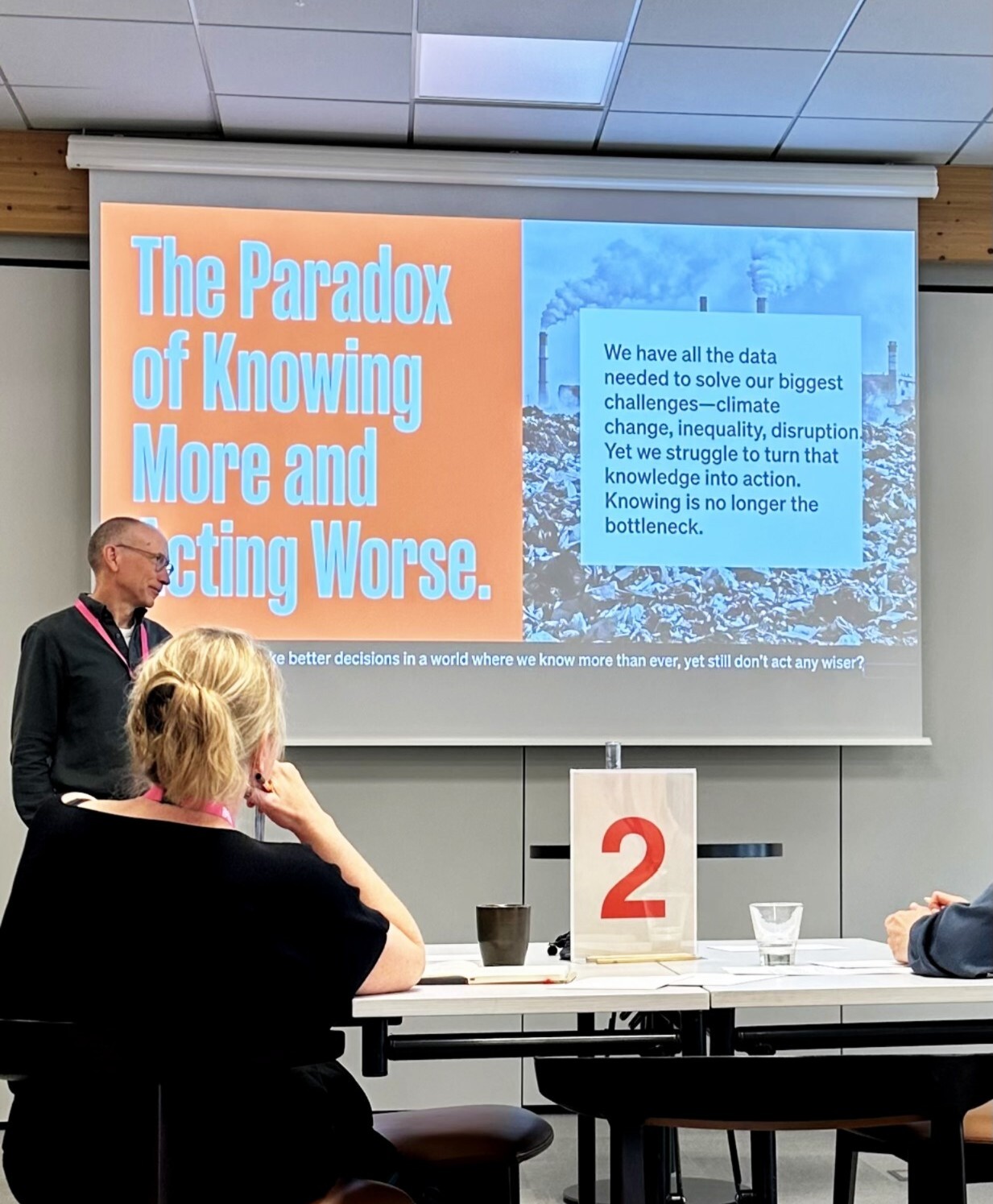
At a think tank co-hosted by SUA and MIT Open Learning in May 2026, a simple question was brought to the audience to open the day: We have all the data needed to solve our biggest challenges climate change, inequality, disruption. Yet we still struggle to turn that knowledge into action.
When knowing is not enough
The opening statement of the event proposed that knowing is no longer the bottleneck. But what is the bottleneck then? This opening stayed with me through the entire Think Tank. And the more I thought about it and spoke about it, the more I realised the answer is organisational, ethical, and deeply human. We are all reading the same data differently.
The core problem, from a corporate perspective, is this: we do not interpret data in a vacuum. We interpret it through the lens of our own goals, incentives, and organisational structures. The same dataset on carbon emissions will look like a risk to one organisation and an opportunity to another. A dataset on an inequality index will prompt one company to act and another to wait.
If organizations are to move from data to meaningful action, they need a shared frame, a common goal that allows data to be read in service of something larger than individual performance metrics.
This raises an immediate and uncomfortable question on setting the goals.
Who defines the goals?
Let's take natural resources as an example. Should a community that has long depended on a forest, a river, or a mineral reserve have a primary voice in how that resource is used? Not as a courtesy, but as a matter of justice and long-term sustainability. Yet businesses are often designed around the assumption that resource decisions belong to markets or shareholders, not to the people most affected by them.
This tension sits at the heart of sustainable development. Businesses should be designed with their full ecosystem in mind. Not covering only the supply chain and the customer, but the communities, ecosystems, and future generations whose wellbeing is affected by every strategic decision.
Short-term value versus long-term impact
Much of this comes down to time horizons. Corporate decision-making is often driven by short-term results, quarterly returns, and growth metrics that were designed for a different era. When short-term value is the primary driver, data that signals long-term risks such as ecological, social, or reputational tends to be ignored or even silently accepted.
This takes us to the redefinition of what growth means. Are we growing in a direction that is regenerative, or simply extractive? Are monetary values leading us toward fragility?
The ethics of whose good counts
Behind every data-driven decision is an ethical choice: whose interests are being optimised for? In practice, the good of some — shareholders, dominant markets, wealthy geographies — has often been prioritised over the good of others.
Sustainable impact demands that we make this tradeoff explicit, examine it honestly, and build accountability for it into organisational structures. What we choose to measure is itself a decision. And the metrics we reward will always shape the behaviours that follow. If we reward revenue growth but not emission reduction, we should not be surprised when revenue grows and emissions don't fall.
Data does not become knowledge on its own
As discussed at the think tank roundtables, data does not automatically become knowledge, and knowledge does not automatically become action. The chain from information to impact has to be deliberately built.
And this challenge is compounded when AI enters the picture. The algorithms organizations increasingly rely on to process and surface data are not neutral. They reflect the biases of those who built them and the datasets used to train them. If training data overrepresents certain geographies, industries, or demographics, the insights produced will too. Using AI to drive sustainability decisions without interrogating the origin and composition of its data risks automating existing inequalities rather than dismantling them.
Question of learning
On the topic of sustainability specifically: many organizations tell employees that sustainability matters. But telling is not teaching. Employees need to understand concretely what climate, social, and governance (ESG) competencies are expected of them in their role. What does "acting sustainably" mean for a procurement manager, a product designer, or a finance team? These connections must be made visible, specific, and learnable.
In the age of AI, the question of learning outcomes is shifting. Information is abundant and increasingly automated. What becomes valuable is the capacity to move from understanding to action. To translate complex, even uncomfortable data into decisions that create real impact, and be accountable for the consequences. That is the skill organizations need to cultivate, and that education systems need to make their central purpose.
Closing thought
I think the Think Tank sharpened the right questions. Knowing is no longer the bottleneck, but aligning purpose, reframing incentives, sharing power, and building the skills to act: these are the real work ahead.
Education that is accessible and oriented toward sustainable impact is not a peripheral concern. If we can build organisations where every employee understands their role in the transition, and has the skills to act on it, we close the gap between knowing and doing. That is the lever.
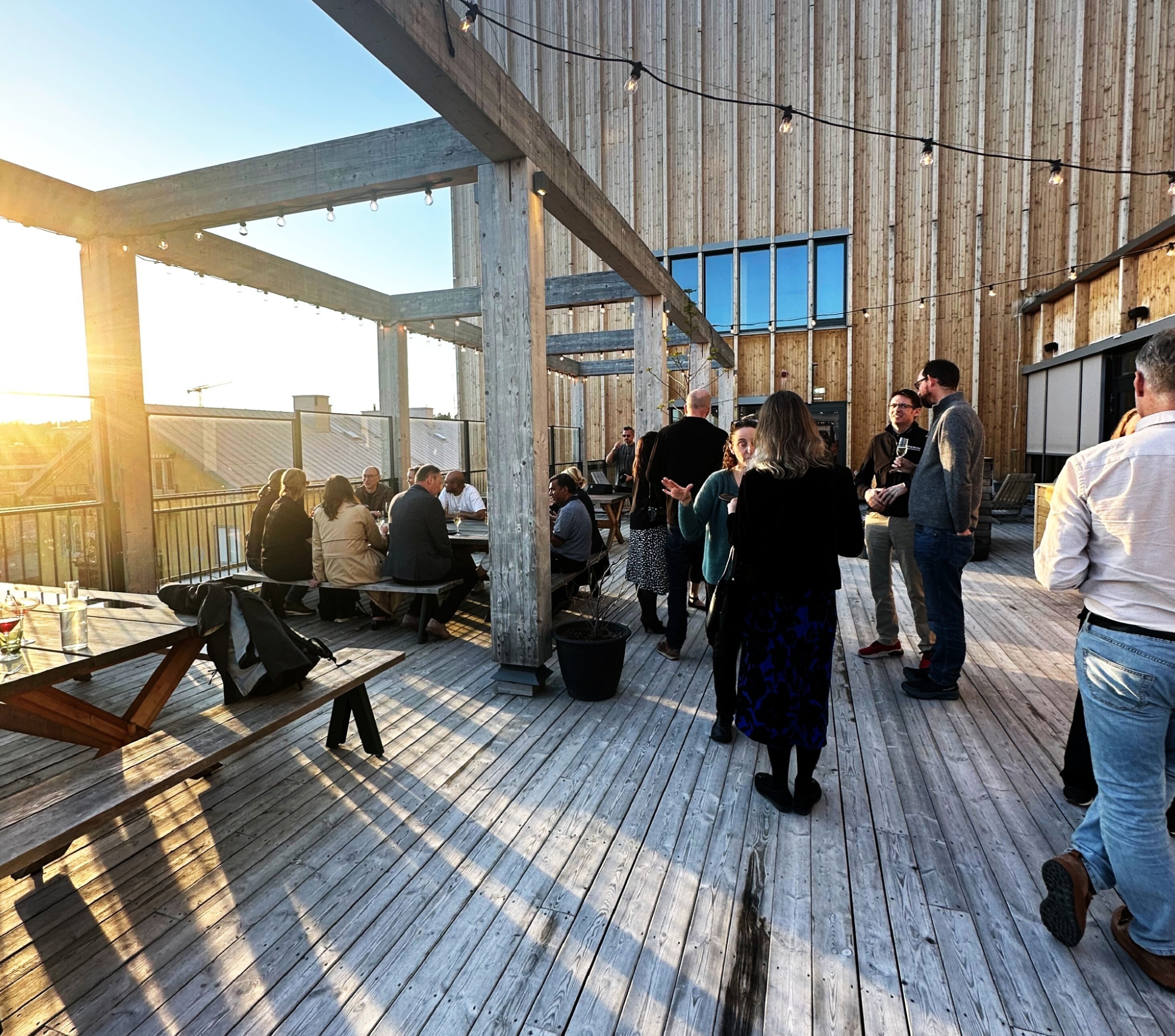
Learnsy was invited to join 40 leaders from academia, industry, the public sector, and the edtech ecosystem at Sara kulturhus in Skellefteå on May 2026 — a high-level Think Tank Day co-hosted by Skellefteå Universities Alliance and MIT Open Learning, exploring how AI, open education, and learning systems can move us from insight to real-world action. It was a privilege for Learnsy represented by the author Suvi Ferraz to be in the room. The connections made during the day have already led to meaningful conversations and new collaborations. Below are my reflections from the roundtable discussions.